New Zealand White
The main white meat breed of commercial rabbit farming worldwide: very fast-growing, but purebred stock is hard to find in Uzbekistan.
Meat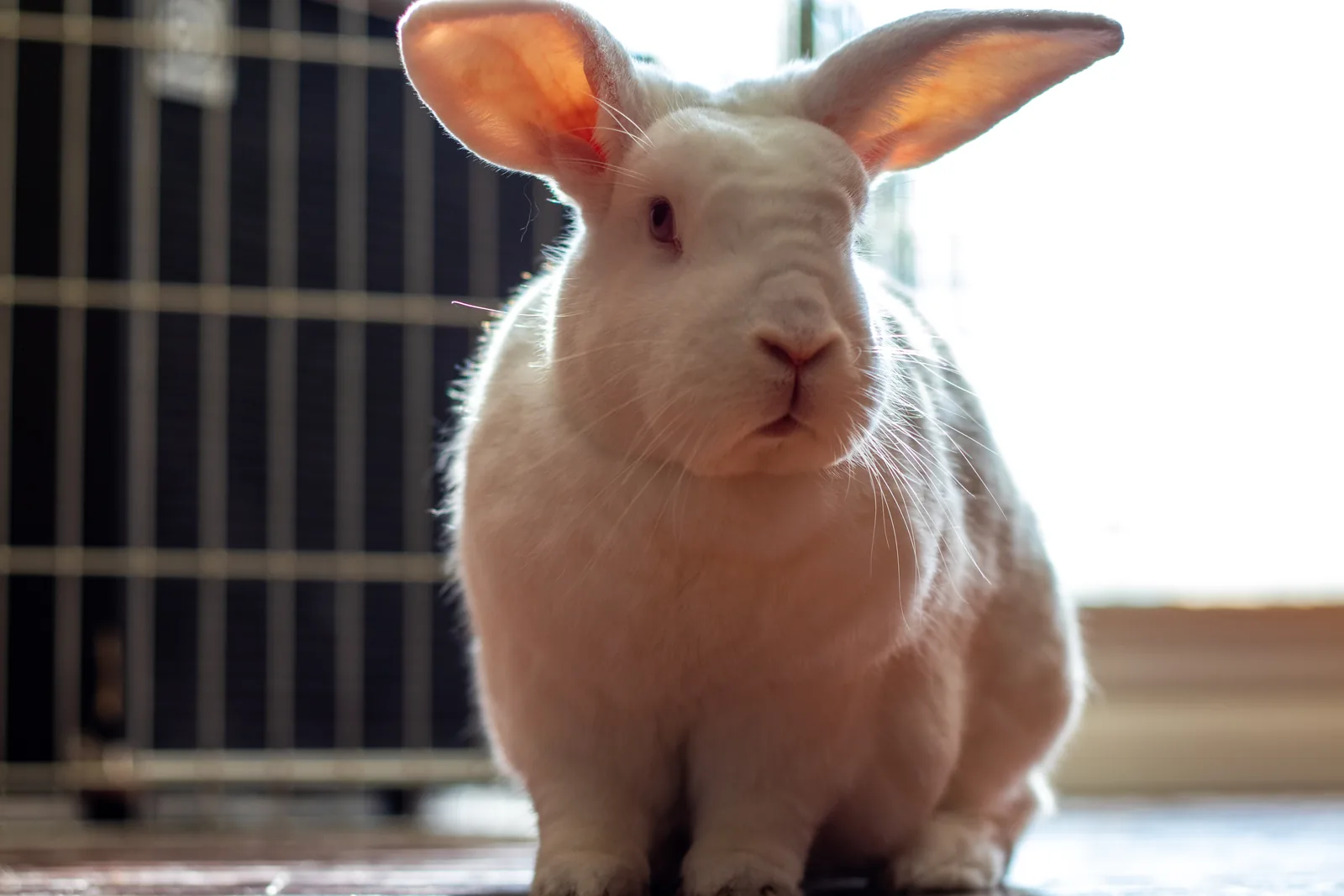
Pros
- Very fast growth and good feed conversion
- Calm temperament, good mother
- Furred feet suit wire floors
- Excellent partner for Californian crosses
Cons
- Purebred stock is hard to find locally
- Looks identical to white crossbreds
- Bucks lose fertility temporarily in strong heat
An all-white, red-eyed rabbit with a long, broad body and medium-length ears. Adults weigh 4–5.5 kg. On good feed, young stock reaches 2.5–2.8 kg at about 90 days, and its feed conversion is among the best of any breed. Does usually have 7–10 kits and raise them well.
Calm and tolerant of noise and handling. The soles of the feet are densely furred, so sore hocks on wire floors are less common. Crossed with the Californian, first-generation crossbreds are usually more productive than either pure breed.
Uzbekistan climate. It is the most studied breed in hot countries, but it is not heat-proof: without shade and ventilation, growth drops noticeably in hot weather. Bucks kept for several days above about 30 °C can become temporarily infertile, and recovery takes around two months. It handles cold well in a dry shed.
Buying locally. Ads say “NZB” or “German line”, but purebred animals are scarce. White, red-eyed rabbits cannot be told apart by looks: “hikol”, “Pannon” or an ordinary white crossbred look the same. Buy from a seller who can show the parents and state their origin and weight.
- Origin
- Despite the name, developed in the USA in the early 20th century.
| Adult weight | 4–5.5 kg |
|---|---|
| Litter size | 7–10 |
| Slaughter age | 90 days |
| Beginner-friendly | 4/5 |
| Growth rate | 5/5 |
| Meat yield | 5/5 |
| Heat tolerance | 3/5 |
| Cold tolerance | 4/5 |
Market price
350,000 UZS
Range: 200,000 UZS–1,000,000 UZS
Asking prices seen in Uzbek Telegram groups over the last 12 months; actual deals vary by age and quality.
All prices