Rex
A fur breed with a short, velvety coat. The pelt is beautiful, but it is slow for meat and you need a pelt buyer lined up in advance.
Fur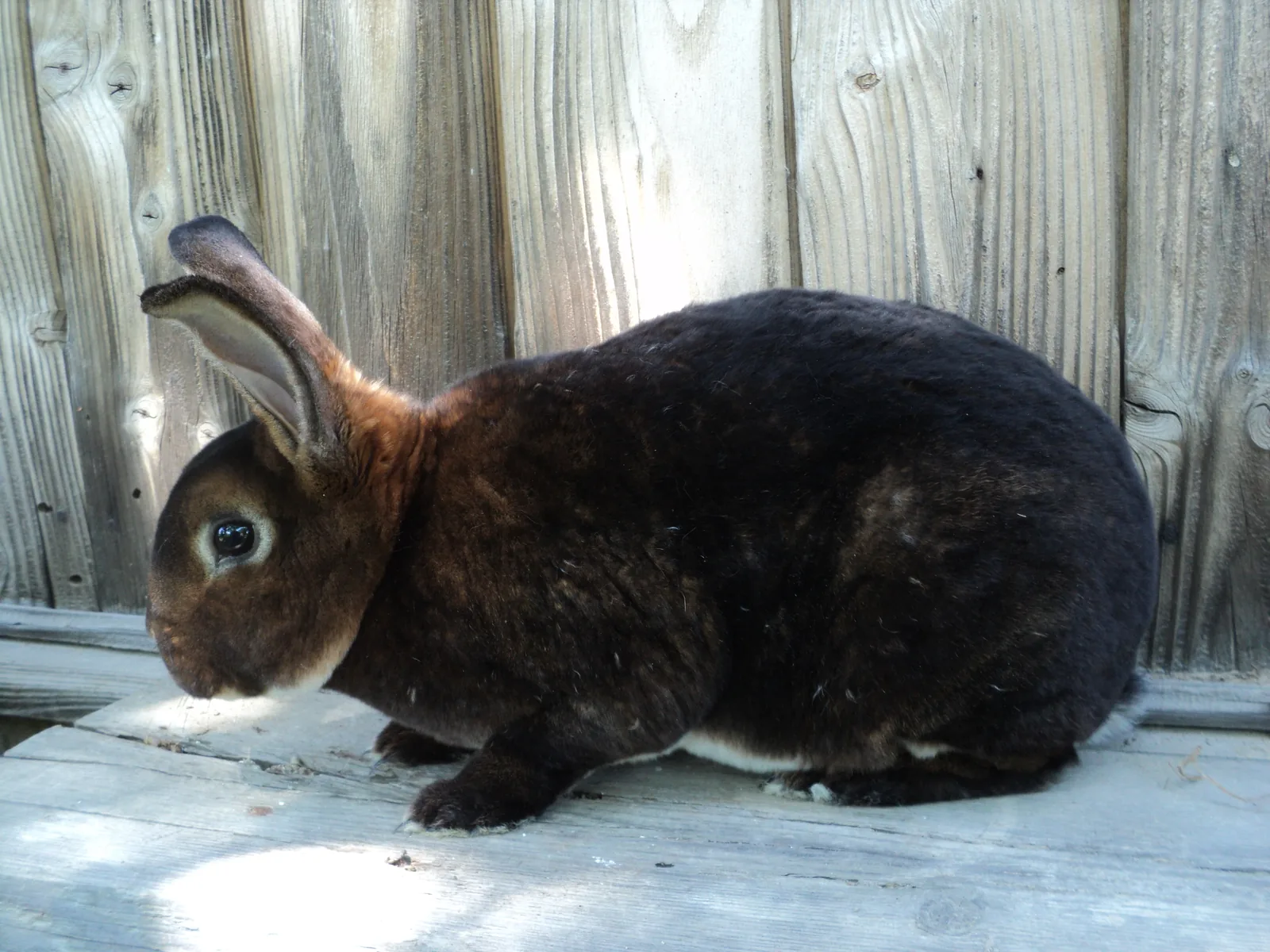
Pros
- Beautiful velvety pelt
- Wide range of colours
- Good local breeding stock exists
- Short coat is a slight advantage in heat
Cons
- Slow growth for meat
- Small market for pelts
- Prone to sore hocks on wire
- Smaller litters
The Rex coat is short (about 1.5–2 cm), dense and stands upright, so it feels like velvet. There are many colours: white, black, blue, castor, tricolour, spotted and more. Adults usually weigh 3–4.5 kg. Does usually have 4–8 kits. Pelts are best after 4.5–5 months, once the coat has fully matured.
The rex gene is recessive: crossed with a normal-coated rabbit, all kits have normal fur. If a pair of “pure Rex” parents produces a normal-coated kit, the parents are not purebred. The temperament is usually calm.
Uzbekistan climate. Its short coat helps it cope with heat slightly better than large, dense-coated breeds, but at 35–40 °C it still needs shade and ventilation. In winter it needs a dry, draught-free shed. The fur on the soles is also short, so sore hocks develop quickly on wire; put a board or plastic mat on part of the floor.
Buying locally. Uzbek Rex breeders have won at international shows, so good breeding stock exists. But Telegram groups are full of “who buys Rex pelts?” questions: the pelt market is small, so find a buyer first. “Karlik rex” (Mini Rex) is a different, much smaller pet breed, not for meat or pelts.
- Origin
- France: developed from a short, velvety coat mutation that appeared in 1919.
| Adult weight | 3–4.5 kg |
|---|---|
| Litter size | 4–8 |
| Slaughter age | 150 days |
| Beginner-friendly | 3/5 |
| Growth rate | 2/5 |
| Meat yield | 3/5 |
| Heat tolerance | 3/5 |
| Cold tolerance | 3/5 |
Market price
500,000 UZS
Range: 150,000 UZS–1,000,000 UZS
Asking prices seen in Uzbek Telegram groups over the last 12 months; actual deals vary by age and quality.
All prices