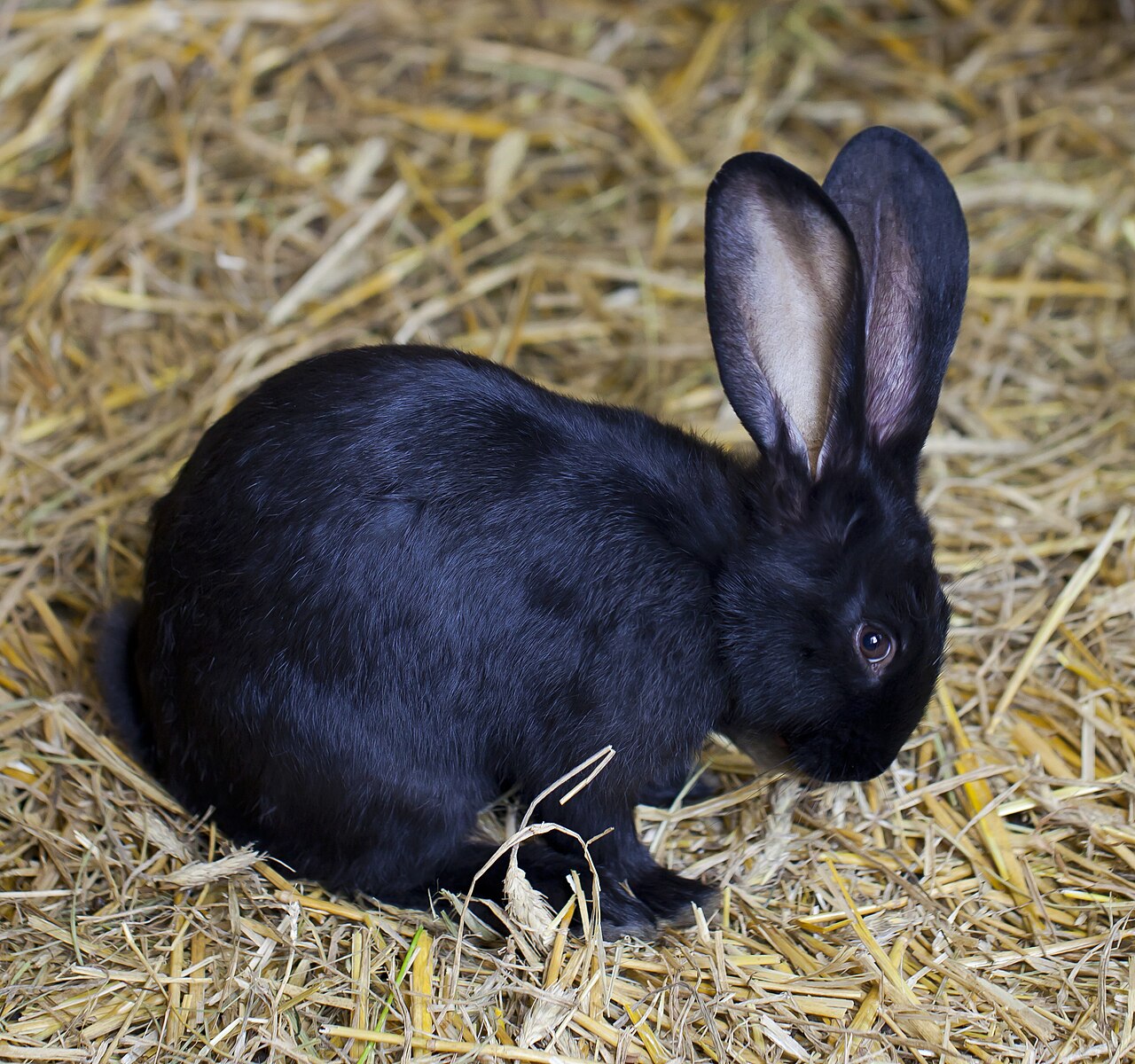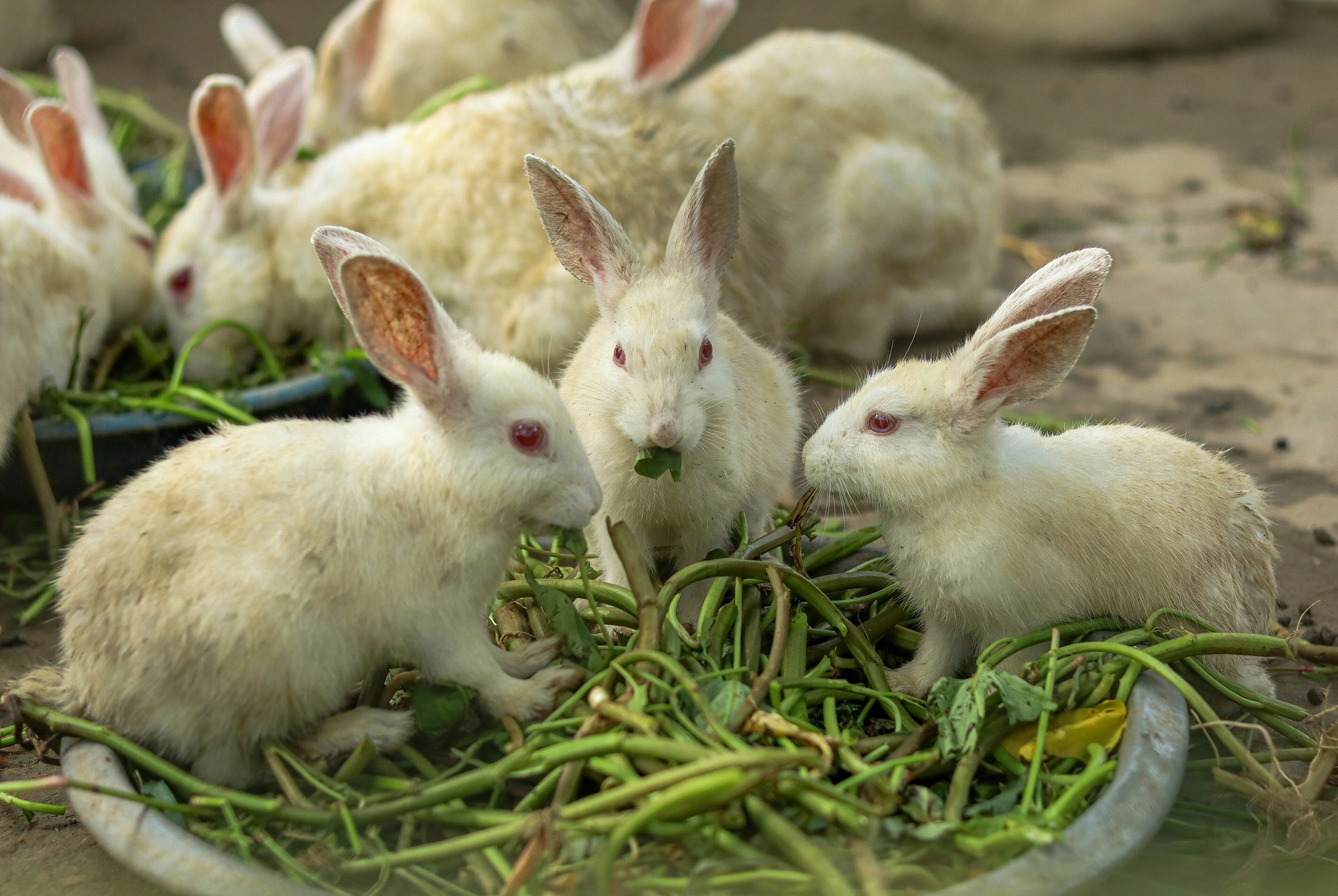
Age at first mating
Judge a doe by her weight and condition, not just her age. As a general guide: around 6 months for medium meat breeds such as Californian and New Zealand White, and 8–9 months for giant breeds. A doe mated too early, before she has finished growing, stops growing herself. If a doe is thin, wait, even if she is already 6 months old.
Take the doe to the buck
Always take the doe to the buck’s cage, never the other way round. A doe defends her territory and may attack a buck put into her cage. A buck in a strange cage, meanwhile, gets busy sniffing and marking instead of mating.
- Stay and watch. After a successful mating the buck usually falls over onto his side.
- If nothing happens within a few minutes, take the doe back and try again later. Do not leave them together for long.
- Do not mate all your does on the same day. If matings are a few days or 1–2 weeks apart, the litters do not all arrive at once, and if one mother has trouble you can move her kits to another doe that kindled around the same time.
Checking for pregnancy
10–14 days after mating, gently feel the lower belly of the doe. If she is pregnant, you will feel a row of small, smooth, firm lumps about the size of a pea. Unlike droppings, they stay in place and are all the same shape. Do not press hard. It helps if an experienced keeper shows you the first time.
Pregnancy lasts about 31 days (28–33 days).
The nest box
Put the nest box in on day 27–28. Too early, and the doe turns it into a toilet; too late, and she may kindle on the wire floor. Fill it with dry straw or hay. When the doe starts carrying hay in her mouth and pulling fur from her belly, kindling is close.
In winter, put polystyrene under the nest box floor and add 15–20 cm of dry bedding. Make sure water is in place the day before kindling — a doe short of water may eat her kits.
Kindling and the first week
A doe usually kindles on her own at night or early in the morning and needs no help. Within 24 hours, look into the nest: count the kits, remove any dead ones, and check the rest are covered with fur. Do not disturb her more than necessary.
- The mother nurses her kits about once a day for a few minutes and does not sit in the nest the rest of the time. This is normal — she has not abandoned them.
- Kits with round, warm bellies have fed. Wrinkled, cold kits have not. Milk can take up to 48 hours to come in.
- The first week is when most kits are lost: too little milk, the doe eating her kits, and chilling.
- Kits can only be fostered to a doe that kindled within a few days of their mother. Rub them with fur from the foster doe’s nest.
Kits grow fur at 5–7 days, open their eyes at 9–12 days and start leaving the nest at 16–20 days.
Rebreeding and weaning
Mating a doe again 1–2 days after kindling is an industrial-farm method. It wears the doe out quickly and is not recommended for beginners. A calmer rhythm is to mate her 10–14 days after kindling, or after the kits are weaned. Kits are usually weaned at 28–35 days; weaning gradually reduces stress.
Avoid inbreeding
- Never mate a doe to her father, her brother or her own son.
- Keep two unrelated bucks and record the father of every litter.
- Every 12–18 months, bring in a new, unrelated buck from outside.
Seasons
When temperatures stay above about 29 °C for several days in a row, bucks become temporarily infertile, and recovery can take 8–10 weeks. Do not count on matings in June–August; mate a few more does in spring instead. In winter, avoid mating from mid-November to early December — kindling would fall in the coldest days.
Common beginner mistake: putting the buck into the doe’s cage, or leaving them together for days. The doe can injure the buck, and you lose the mating date — so you no longer know when to put in the nest box.