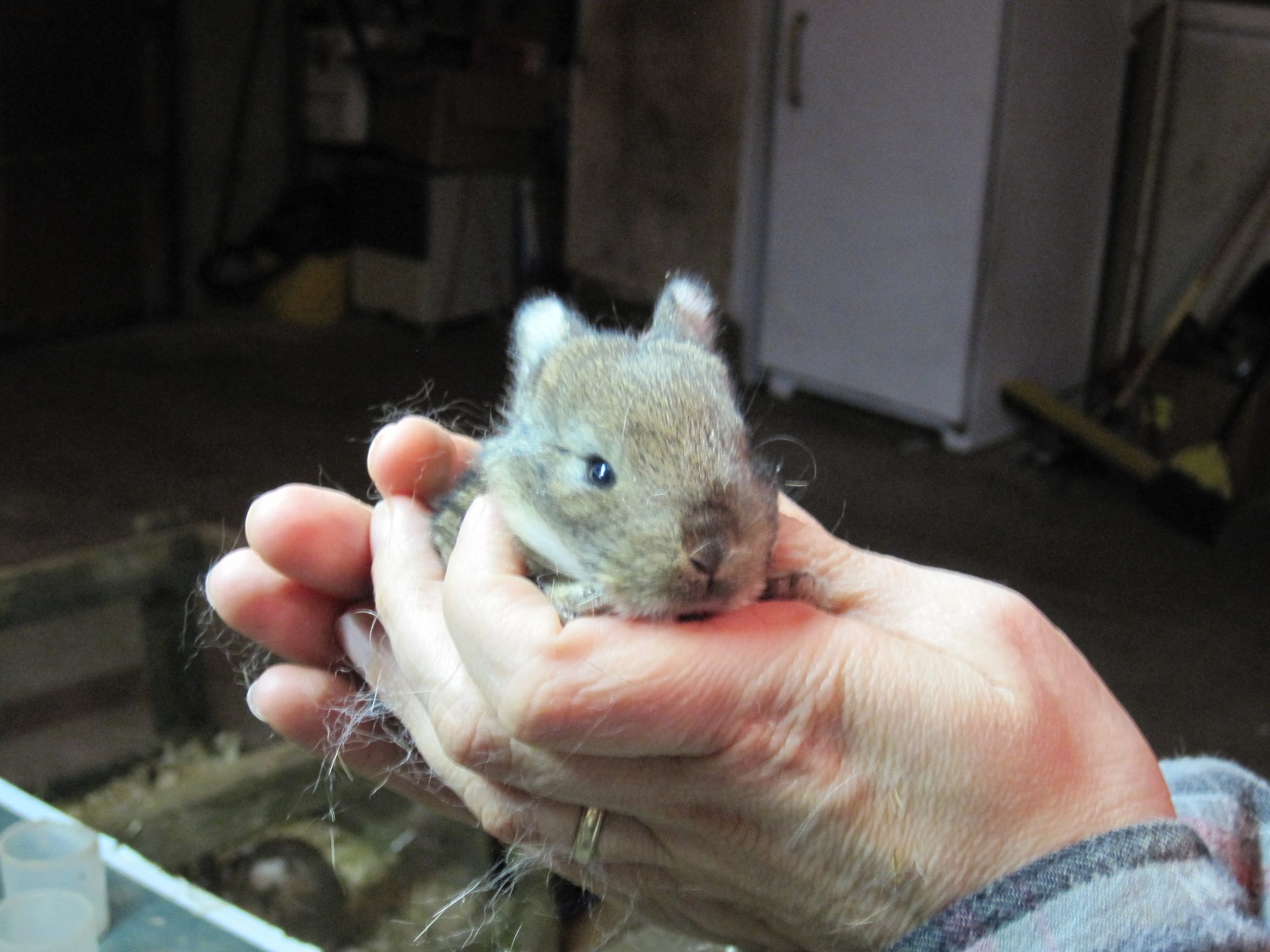
Why a routine matters
Most problems with rabbits do not appear overnight. They start small: a rabbit leaves some feed, a drinker nipple clogs, one kit has a dirty rear end. Checking in the same order every day helps you spot these things in time.
For a few does, the daily work usually takes 15–30 minutes, done in two short rounds — morning and evening.
Every day
- Look at every rabbit: appetite, movement, breathing, eyes and nose, droppings. Uneaten feed can be the very first sign of illness.
- Check the water: press every nipple or look into every bowl. A full tank is not enough.
- Feed and hay: is there enough, is it dry, is it clean?
- Remove uneaten greens before they go sour.
- Clear droppings and wet bedding, and empty urine trays if needed.
- In summer, check for heat stress: is a rabbit breathing fast, lying stretched out, with hot ears? Is there shade and moving air?
- In winter: is the water frozen, and is the nest box bedding dry?
- In kindling weeks: take a careful look into the nest box (step 8).
- Write down anything unusual: date, cage, what you saw.
Every week
- Wash the cages thoroughly and disinfect with a product a vet has approved. After chlorine products, air the space and let it dry completely — chlorine fumes harm rabbits’ airways.
- Clean nipples and drinkers: slime and algae build up inside.
- Check ears. If a rabbit shakes its head, scratches, or has crusts in its ears, do not treat it yourself — contact a vet.
- Inspect cages, mesh and doors for broken wire, holes and signs of rats.
- Keep an eye on how the young rabbits are growing, and weigh them if you can.
- Check where the urine collects and the state of the bedding.
Every month
- Deep-clean and disinfect the cages.
- Flush the whole watering system from end to end.
- Check that the fan and thermometer work.
- Review feed, hay and bedding stocks, and restock before you run out.
- Go through your records: who was mated when, who kindled, how many kits died, who should be culled.
- Move the manure out to the garden.
Occasional jobs
- At least twice a year, disinfect the whole rabbitry (spring and autumn are convenient).
- Deworming — a vet sets the timing. General guidance: every 6 months for rabbits kept only in cages, every 3 months for rabbits that eat cut grass or roam the yard.
- Vaccination — on the schedule your vet sets (step 9).
- Before summer, get shade, fans and watering ready; before winter, prepare nest boxes, insulation and frost protection for the water.
Calendar for one litter
- Day 0 — mating; write down the date.
- Days 10–14 — feel the belly to check for pregnancy.
- Days 27–28 — put in the nest box; water must always be available.
- Around day 31 — kindling.
- Within 24 hours of kindling — check the nest and remove any dead kits.
- 4–5 weeks — weaning.
The sheet on the wall
A phone is useful, but a paper sheet on the rabbitry door is more reliable — especially when someone else is looking after the rabbits while you are away. Write in large letters:
- No water coming through → fix it now, not tomorrow.
- Rabbit panting, limp, hot to the touch → move it to shade and somewhere cool straight away, then phone.
- Sudden death, blood from the nose, several deaths in a row → separate the rest, keep visitors out, call the vet.
- The phone numbers of your vet and of the person who covers for you.
Common beginner mistake: not pressing the nipple because "the tank is full, so there is water", or pouring in feed and leaving without looking at the rabbits. A blocked nipple and a rabbit that has stopped eating are both invisible from a distance — you only notice them with a close look every day.