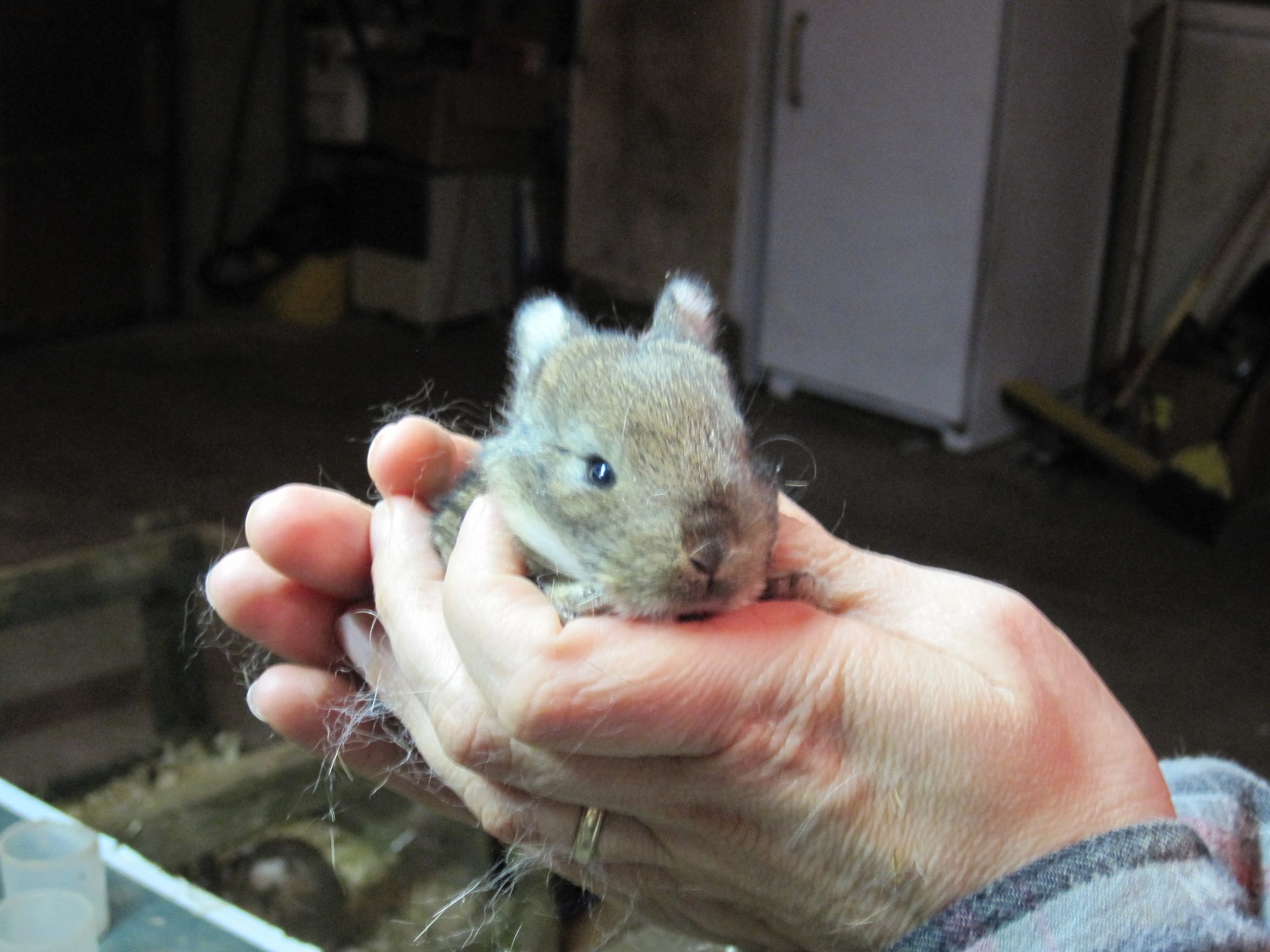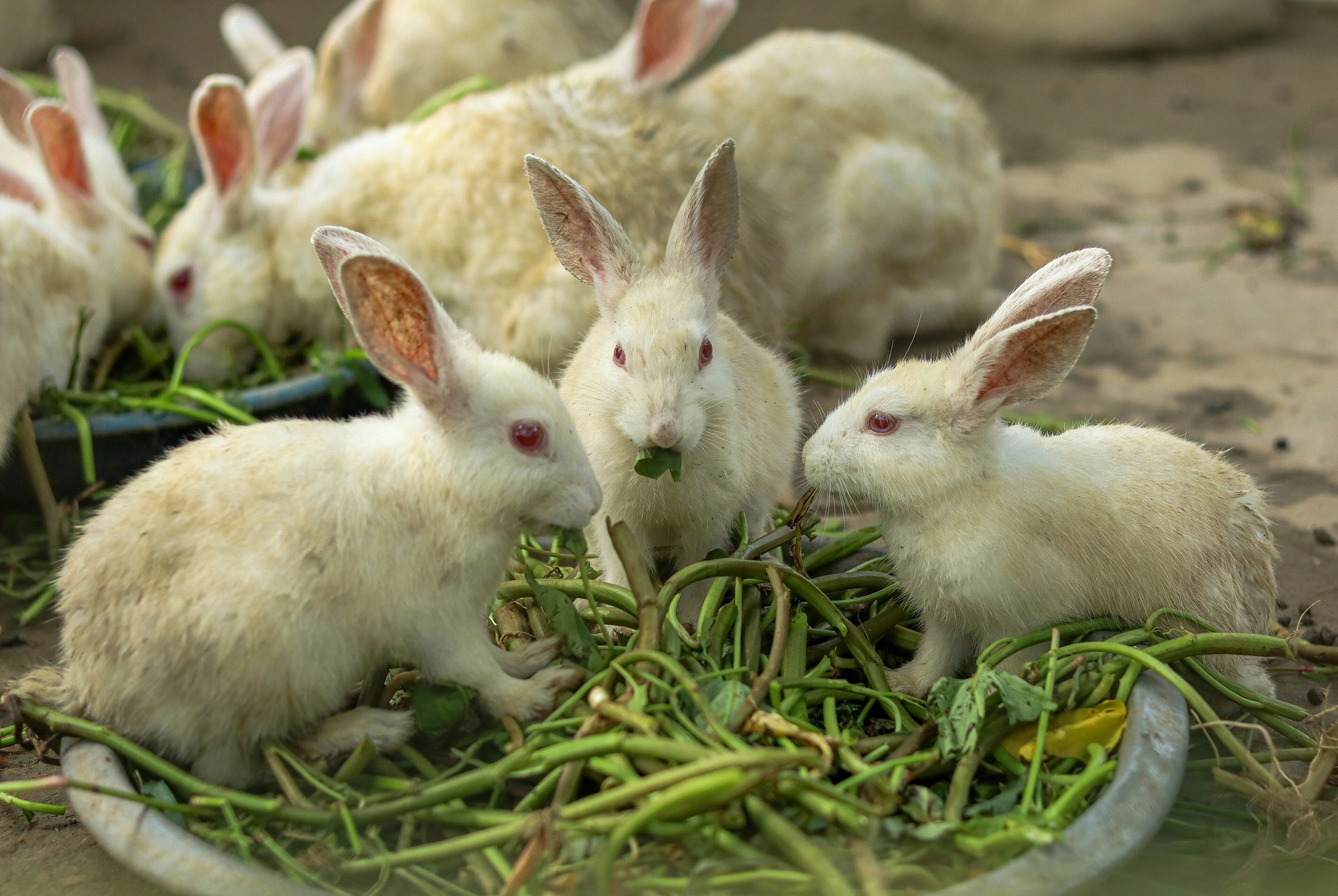
In most of Uzbekistan the biggest danger to rabbits is heat, not cold. Rabbits cannot sweat and cool themselves poorly by breathing, so they depend entirely on the shed you build for them. Welfare and growth start to fall once the air is above about 27–28 °C, and a rabbit whose body temperature climbs past 40.5 °C is in heatstroke. Summer afternoons in Tashkent region are well above both numbers.
Signs of heat stress
- Fast, shallow breathing
- Lying stretched out flat and not eating
- Hot ears, weakness, wobbling
- In bad cases: collapse, convulsions, sudden death in the hottest hours
Heat combined with a power cut that stops a fan can kill rabbits within hours. That is faster than running out of water (roughly 24–48 hours) or a jammed feeder (days).
Bucks go infertile long before they die
The quiet summer loss is fertility. When temperatures stay above about 29 °C for several days in a row, bucks can become temporarily sterile. They look healthy and still mate, but the does do not conceive. Recovery is slow: new sperm takes about 44 days to form and another 10–14 days to mature, so allow 8–10 weeks before a heat-hit buck is reliable again. This is why August and September litters so often "disappear" on uncooled farms.
The loss has been measured. On an uncooled farm in Egypt, 76% of matings produced a litter in winter but only 20% in summer. On a climate-controlled farm in Germany the figures were 71% and 69%. Good cooling almost removes the summer penalty.
In practice:
- Clip the bucks' coats in late May. In trials this lowered body temperature and helped semen quality recover faster.
- Plan most matings for October–April, and aim for a small surplus of litters in April–May.
- Do not count on matings in June–August.
- Keep replacement breeders from animals that still produced litters in July, and prefer smaller-framed, longer-eared individuals.
Shade and the roof
Most of the heat comes in through the roof.
- Insulate the roof first; it matters far more than the walls. Leave a ventilated gap under the roofing.
- A reed (qamish) roof keeps a shed cooler than bare metal sheeting, which soaks up the sun.
- Build roof overhangs of 70–80 cm so the midday sun never reaches the cages.
- Run the long side of the shed east–west, and shade the south and west walls with vines or trees.
- Avoid three-tier cage stacks. Hot air collects in the top row.
Airflow
- In summer, air moving along the cages at up to about 1 m/s helps rabbits shed heat. In winter the limit is about 0.3 m/s.
- Fans should blow along the rows, never straight at the animals.
- Put air inlets low and at mid-height, and the exhaust high.
- Leave nest boxes open during the day so air reaches the kits.
- House older bucks and young does nearest the cooling. Older bucks are the most heat-sensitive animals in the shed.
- Do not overcrowd. In hot weather keep growing rabbits under 18 per m² or 34 kg of rabbit per m². In one hot-climate trial, mortality above that density was 20.5% against 9.6% below it.
Cooling methods that suit Uzbekistan
Summer air is dry in most of the country, and dry air is exactly where evaporative cooling works best.
- Evaporative cooling pads. Water-soaked pads sit on the air inlet and an exhaust fan pulls air through a closed shed. This works well in dry air, but it makes a single fan the thing your herd depends on. How much it lowers the temperature in Uzbek conditions has not been measured, so check your own shed with a thermometer.
- Frozen water bottles. A frozen bottle in the cage gives a rabbit something cool to lie against. No electricity needed.
- Cool, not ice-cold, drinking water. A growing rabbit drinks about 271 g of water a day at 18 °C and about 386 g at 30 °C; a nursing doe can drink up to 2 litres. Change water often. Evidence that cool water improves production is mixed, but it is cheap and safe.
- Misting and wetting the roof. Popular and physically sensible, but never properly tested in trials. If you mist, keep bedding and feed dry, because damp floors encourage coccidiosis.
Location matters too: hill towns such as Angren (961 m above sea level) average 3–4 °C cooler in July than Tashkent city.
When the power goes out
- Have a battery or inverter backup for at least the exhaust fan, and if possible a temperature alarm that sends a message to your phone.
- Keep frozen bottles ready in the freezer at all times.
- If the shed is closed up for cooling pads, open every door and vent.
- Check every drinker by hand.
- Put off handling, transport and mating until the cool of the evening.
- If a rabbit is limp and hot to the touch, move it to the coolest shade, wet its ears with cool water, offer water and call a vet.
Common mistake: "Going easy" on does in summer by leaving kits with them longer. In a trial, moving mating from day 14 to day 21 after kindling and weaning from day 35 to day 42 raised mortality during lactation from 48.5% to 63.4% and cut the number of kits weaned per litter by a third. Keep your normal schedule and fix the shed instead.